Ziyad Al-Aly is a physician-scientist. He is Director of the Clinical Epidemiology Center and Chief of Research and Development Service at the VA St. Louis Health Care System, and Senior Clinical Epidemiologist at Washington University in St. Louis. He founded the Clinical Epidemiology Center in 2013. His research uses large-scale health records to investigate the long-term effects of illness, the safety of medicines and the health consequences of environmental exposures.[1]
His team published the first systematic characterization of Long COVID in 2021 and mapped the benefits and risks of GLP-1 medicines across 175 health outcomes.[8][33] It identified kidney and mortality risks associated with proton pump inhibitors.[2][3] Its environmental research linked air pollution with kidney disease, diabetes and obesity.[4][5] The team also mapped the burden of kidney disease in the United States and worldwide.[6][7]
Al-Aly co-chaired the committee developing the U.S. National Research Action Plan on Long COVID and testified before the U.S. Senate in 2024.[16][17] He has advised the World Health Organization, the OECD and Canada’s Chief Science Advisor. He was named to TIME100 Health in 2024 and recognized as a Clarivate Highly Cited Researcher in 2024–2026.[27][25]
Education and clinical training
Al-Aly studied biology at the American University of Beirut in 1992–1995, earning a Bachelor of Science, and medicine there in 1995–1999, earning his medical degree. After an internal-medicine internship at the university in 1999–2000, he moved to St. Louis in 2000.[1]
He completed an internal-medicine residency at Saint Louis University in 2000–2003 and a nephrology fellowship in 2003–2006, serving as chief nephrology fellow in 2004–2005. His research fellowship in bone and mineral metabolism at Washington University ran from 2005 to 2006, overlapping the final year of his nephrology training.
Credentials
He became a Fellow of the American Society of Nephrology in 2018. He is board certified in nephrology by the American Board of Internal Medicine.
Clinical practice and research leadership
Al-Aly joined the VA St. Louis Health Care System as a staff physician in July 2006. He has held a weekly nephrology clinic since 2006. Working with longitudinal VA health records brought his clinical and epidemiologic research together: the records allow researchers to follow diagnoses, laboratory results, treatments and outcomes across years of care.[1]
He became Chief of Research and Development Service and Research Integrity Officer in September 2012, leading the VA research program. During his tenure, the program grew from 2 to 49 active clinical trials and from 6 to 59 lines of funding including 37 VA Merit awards.
In July 2013, he founded the Clinical Epidemiology Center, initially staffed by one full-time and one part-time analyst. The center now brings together approximately ten PhD-level and senior researchers across clinical epidemiology, pharmacoepidemiology and environmental epidemiology.
He also directed the VA’s Center of Excellence for Outcome Research in Nephrology in 2012–2016. His subsequent work at the Clinical Epidemiology Center extended across medication safety, environmental exposures and the lasting consequences of infection.
Al-Aly is Senior Clinical Epidemiologist at Washington University in St. Louis. He has been a Scholar in the Institute for Public Health at Washington University in St. Louis since March 2015.
Research
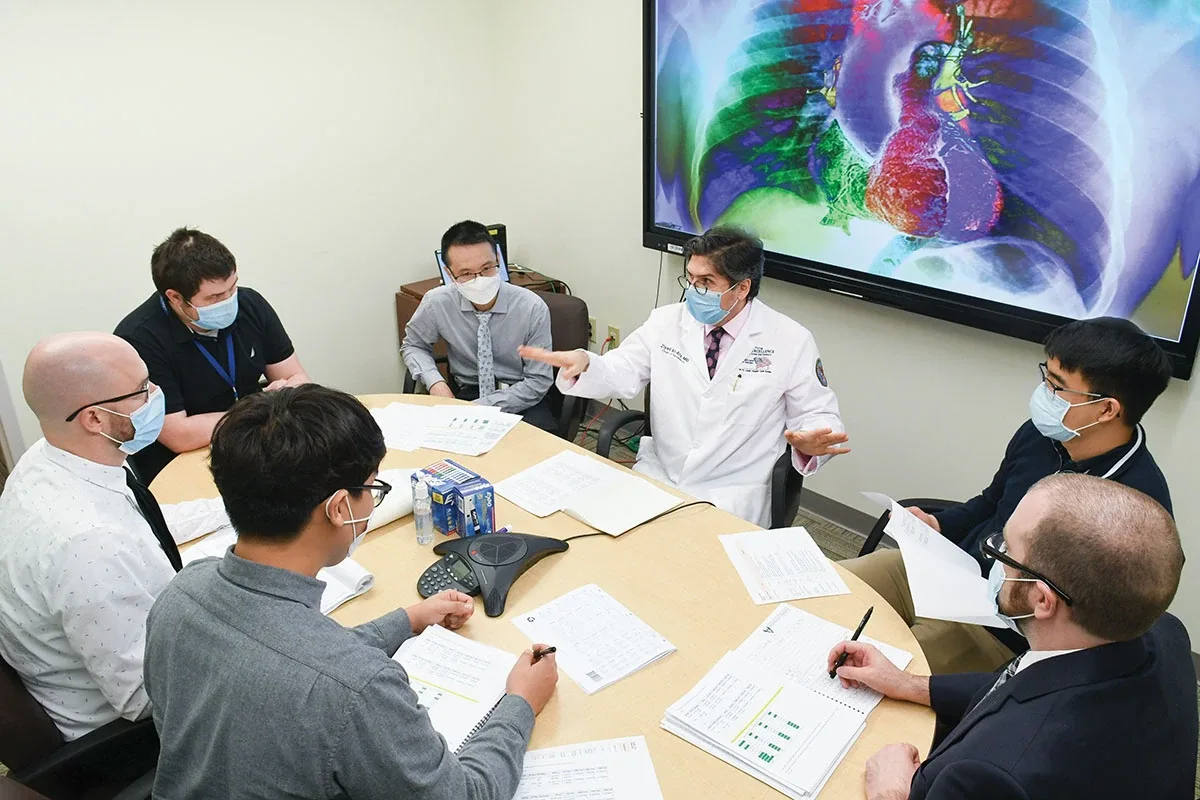
Al-Aly’s research follows questions that arise in clinical care and public health: how diseases affect people over time, whether common treatments cause harm or confer unexpected benefits, and how environmental exposures shape health. The team studies these questions in large cohorts drawn from electronic health records, using epidemiologic methods including target trial emulation for treatment comparisons.
Medicines and kidney health
A 2016 JASN study linked proton pump inhibitors with increased risks of chronic kidney disease and kidney failure compared with H2 blockers.[2] The 2016 study was the center’s first paper to attract media attention. Later work examined mortality, including a 2019 study in The BMJ.[3] These studies raised questions about prolonged treatment and appropriate prescribing. The European Medicines Agency opened a safety review following the kidney-disease signal; the review closed without a labeling change.[37][38]
Environmental health and population burden
Studies linked fine-particle air pollution with kidney disease, diabetes, weight gain and obesity.[5] The 2018 diabetes analysis estimated 3.2 million new diabetes cases worldwide attributable to fine-particle pollution in 2016.[4] Separate analyses mapped the growing and unequal burden of chronic kidney disease across U.S. states and worldwide, examining demographic change and modifiable risks.[6][7] WHO included findings from the pollution cohort in the evidence supporting its 2021 air-quality guidelines; that use concerned mortality evidence rather than the diabetes endpoint.[36]
COVID-19 and lasting illness
In April 2021, the team published the first systematic characterization of Long COVID in Nature, describing consequences across multiple organ systems.[8] Subsequent studies examined cardiovascular, neurologic, kidney, metabolic and gastrointestinal outcomes; the additional risks associated with reinfection; and health loss over several years.[9][10] A comparison of people hospitalized with COVID-19 or seasonal influenza showed that substantial health loss could continue beyond the acute phase of either infection.[13] The CDC cited the April 2021 Nature paper in its June 14, 2021 interim clinical guidance, within eight weeks of publication.[35]
The cardiovascular study ranked 28th by Altmetric Attention Score among research outputs tracked across all sources (2 November 2026).
Vaccines and treatment
The team studied Long COVID after breakthrough infection, finding that vaccination reduced but did not eliminate risk.[11] Later research examined changes in Long COVID risk across pandemic eras, the association between early antiviral treatment and subsequent illness,[34] and the effectiveness of updated vaccines against COVID-19 emergency visits, hospitalization and death.[12] The 2024 pandemic-era analysis attributed most of the observed decline in Long COVID risk to vaccination.[41]
GLP-1 medicines and addiction
A 2025 Nature Medicine atlas examined 175 health outcomes to map potential benefits and harms beyond weight and blood sugar.[33] In 2026, a BMJ study linked GLP-1 use with lower risks of new substance use disorders and, among people with existing disorders, lower risks of overdose and substance-related death.[14] These observational findings support further testing in clinical trials. A separate 2026 BMJ Medicine study examined cardiovascular outcomes after GLP-1 treatment stopped, finding that benefits diminished after discontinuation.[40]
Few, if any, physician researchers have done more to understand the long-term impact of Covid than Dr. Ziyad Al-Aly.
Government and international public service
Long COVID policy
Al-Aly has contributed scientific evidence to U.S. research planning, legislative hearings and international advisory work. From 2022 to 2024, he co-chaired the committee developing the U.S. National Research Action Plan on Long COVID and served on the U.S. Government Long COVID Coordination Council. His service also includes the White House Long COVID policy committee, the VA Long COVID Task Force and the White House Cancer Moonshot Data and Innovation Task Force (2023–2024). The national research plan cited seven of the team’s studies.[16]
This service followed 2021 briefings to the White House working group, FDA, Department of Defense and Indian Health Service.
The Senate
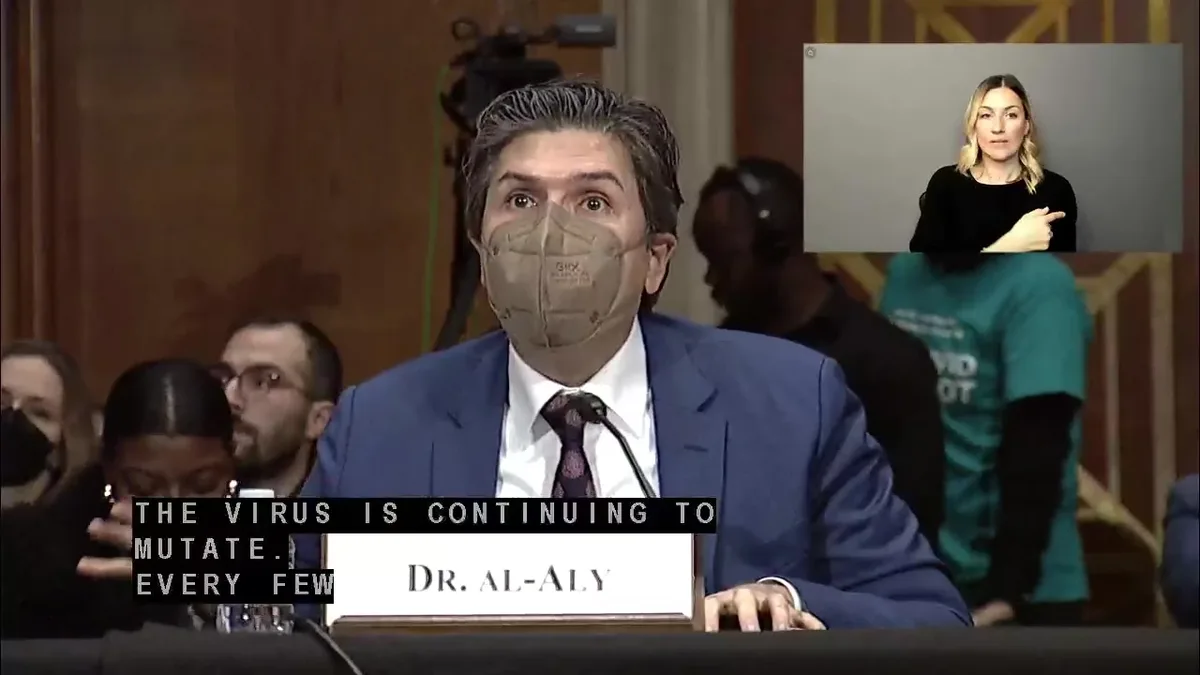
In January 2024, he testified as an expert witness before the Senate HELP Committee at its hearing on Long COVID research and patient care.[17] His testimony reported that there were no approved treatments for Long COVID at that time and called for an NIH institute focused on infection-associated chronic illnesses, funded at no less than $1 billion annually.[18] He subsequently briefed the White House Office of Pandemic Preparedness and Response Policy in February 2024 and joined a May 2024 roundtable with the NIH Director hosted by Senator Roger Marshall. In August 2024, Senator Bernie Sanders introduced the Long COVID Research Moonshot Act, proposing $1 billion annually for ten years.[39]
National Academies and NIH
At the National Academies, he briefed the standing committee of medical and vocational experts for Social Security disability programs in 2022, served on the 2023–2024 committee examining long-term COVID-19 health effects and implications for Social Security,[19] and reviewed the 2024 report on a Long COVID definition.[20]
His NIH service includes consultation to the National Heart, Lung, and Blood Institute on future Long COVID research from 2023 and co-chairing its workshop on SARS-CoV-2-associated atherosclerosis, atherothrombosis and coronary artery disease from 2024.
International advice
Internationally, he has advised the World Health Organization on long-term COVID-19 effects and Canada’s Chief Science Advisor since 2022. He has advised the OECD Health Division on Long COVID’s economic consequences since 2024. His advisory work included a 2022 Canadian roundtable, a 2024 Canadian report, review of a draft 2026 OECD report, and a 2024 keynote at an OECD, WHO Europe and European Commission meeting in Brussels. WHO’s 2025 Long COVID fact sheet cites the team’s work, including its review with patient-led researchers.[21]
He led work that provided the first systematic characterization of the post-acute sequelae of SARS-CoV-2 infection.
Scientific and institutional leadership
Al-Aly chaired the American Society of Nephrology’s Publications Committee and served on its Executive Committee in 2017–2020. His editorial roles include guest editor of the Journal of the American Society of Nephrology in 2020 and 2021, associate editor in 2021–2024, and acting editor in chief of the American Journal of Kidney Diseases in January 2025.
He served as president of the board of the Veterans Research and Education Foundation of Saint Louis in 2012–2015 and continued on its board from 2015. He joined the International Science Advisory Board of Long COVID Web in Canada in 2024.
He chaired the American Society of Nephrology’s searches for the editors in chief of Kidney360 in 2019 and Kidney News in 2020. His editorial-board service has included JASN (from 2017), the Clinical Journal of the American Society of Nephrology (from 2014), Kidney360 (from 2019), Kidney International (2009–2016), Transplant International (from 2009), Clinical Nephrology (from 2012), Translational Research (2009–2019), Scientific Reports (2019–2020), the International Journal of Nephrology (2010–2018) and the European Medical Journal Nephrology (2017–2020).
His grant-review service includes NIH special-emphasis panels from 2017, VA Merit Review study sections from 2013, the Swiss National Science Foundation from 2008, the Dutch Kidney Foundation from 2016, the UK Medical Research Council Newton Fund in 2019 and Ireland’s Health Research Board in 2012. He has reviewed manuscripts for journals including Nature, Science, Cell, the New England Journal of Medicine, The Lancet, Nature Medicine and Annals of Internal Medicine.
Other service includes chairing the Scientific Advisory Board of the National Kidney Foundation of Eastern Missouri and Metro East in 2008–2010 and serving on its board from 2008; the VA’s Executive Committee of the Medical Staff from 2012, Professional Standards Board from 2013 and Graduate Medical Education Committee as chair from 2014; and the Public Health Action Network board from 2024. He has been a collaborator in the Global Burden of Disease Collaborator Network at the Institute for Health Metrics and Evaluation since 2015.
Patient partnerships and public communication
Patient accounts helped direct the team’s attention to illness persisting after acute COVID-19.[1] Al-Aly joined the advisory board of Long Covid Support, a United Kingdom patient charity, in 2022.[22] In 2024, he coauthored a Nature Medicine review on Long COVID science, research and policy with researchers from the Patient-Led Research Collaborative,[15] and contributed medical review to Long COVID Essentials, a resource series from Long COVID Justice and The Sick Times.[23]
Al-Aly explains research findings through essays, interviews and talks, including public writing in STAT, The Guardian, The BMJ and The Conversation. As of October 2026, his team’s research had been covered in more than 10,000 media articles across 114 countries and territories and 55 languages, and cited in 559 policy, guideline and decision-support documents across 31 countries.
Selected awards and recognition
- 2024 · TIME100 Health, TIME.[27]
- 2024–2026 · Highly Cited Researcher, Clarivate.[25]
- 2023 · Secretary’s Award, U.S. Department of Veterans Affairs.[24]
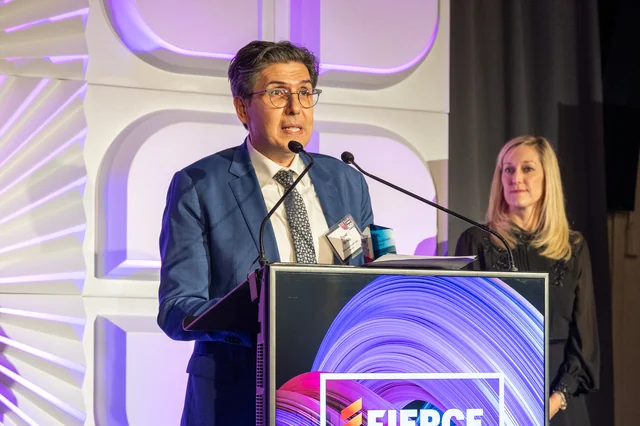
- 2024 · Fierce 50, Patient Advocacy.[28]

Al-Aly’s honors span research, patient advocacy and public health. In 2023, the Secretary of Veterans Affairs recognized his contributions to understanding COVID-19’s long-term health effects.[24] TIME included him in its inaugural TIME100 Health list in 2024,[27] alongside recognition from Fierce 50 for patient advocacy.[28]
Clarivate’s Highly Cited Researcher designation recognizes researchers with multiple papers ranking among the top 1 percent by citations for their field and publication year.[25]
helped shape the world’s newfound understanding of the long-term effects of COVID-19
Scholarly record
He was included annually in the Stanford/Elsevier single-year citation-impact datasets from 2020 to 2026. The 2026 rankings use the composite citation indicator excluding self-citations, with 2025 citation data.[26]
2026 · Stanford/Elsevier citation-impact database: 23rd for single-year and 190th for career-long citation impact in General & Internal Medicine, excluding self-citations.[26]
252 publications; more than 218,000 citations and an h-index of 119. The publication total is from the November 2026 publication catalogue. Google Scholar recorded 218,033 citations and an i10-index of 213 on November 2, 2026.[32]
Named lectures and selected keynotes
Al-Aly’s invited lectures address the worldwide burden of Long COVID, the lasting consequences of infection, and priorities for research and care.
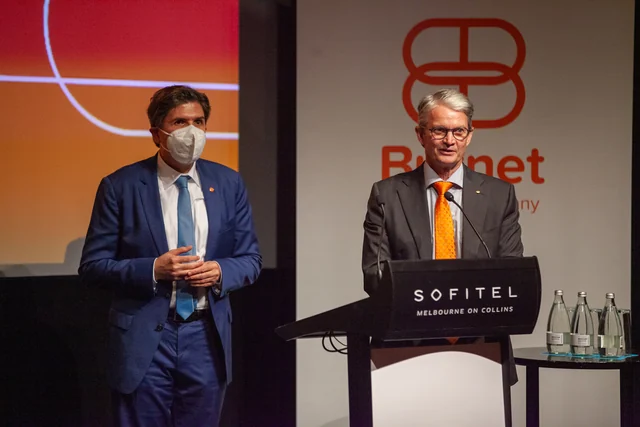
- December 2023 · Burnet Oration, “Addressing the worldwide burden of Long Covid,” Burnet Institute, Melbourne.[31]
- January 2024 · Maury Strauss Distinguished Public Lecture, “Long Covid: the Lasting Legacy of the COVID-19 Pandemic,” Virginia Tech.[30]
- April 2024 · Keynote, “Long Covid: the lasting legacy of the COVID-19 pandemic,” Institut Pasteur, Paris.
- April 2024 · Keynote on the lasting legacy of the COVID-19 pandemic, University of Geneva.
- May 2024 · Keynote, “Long Covid: key findings of multiorgan dysfunction, knowledge gaps and research priorities,” First China Pneumonia Congress, Beijing.
- 2024 · Keynote at the OECD, WHO Europe and European Commission meeting on Long COVID, Brussels.
- October 2025 · Keynote, IACFS/ME International Research and Medical Conference, virtual.
- August 2026 · Opening plenary keynote, “Long COVID, the first PAIS studied at scale: what we learned and what comes next,” ISLC-PAIS, Amsterdam.
Career timeline
Explore 16 career milestones
- 1999Earns his medical degree at the American University of Beirut
- 2006Joins VA St. Louis as a kidney doctor and researcher
- 2012–2013Takes on VA research leadership and founds the Clinical Epidemiology Center
- 2016Links commonly used heartburn medicines with kidney disease
- 2017Begins leadership of ASN’s Publications Committee
- 2018Estimates the global diabetes burden attributable to air pollution
- 2021Publishes the first systematic characterization of Long COVID
- 2022Studies cardiovascular outcomes, reinfection and Long COVID after vaccination
- 2022Co-chairs development of the national Long COVID research plan
- 2022Begins advising Long Covid Support; develops patient research partnerships
- 2022Advises WHO, Canada’s Chief Science Advisor and later the OECD
- 2023Delivers the Burnet Oration in Melbourne
- 2023–2024Serves on the National Academies committee on long-term COVID-19 effects
- 2023–2026Receives VA, TIME100 Health and Highly Cited Researcher recognition
- 2024Testifies before the U.S. Senate HELP Committee
- 2025–2026Maps 175 GLP-1 outcomes and extends the work to addiction
References
- WashU Medicine: Real-world reflections ↩2 ↩17 ↩20 ↩64
- Proton pump inhibitors and kidney outcomes, JASN (2016) ↩5 ↩25
- Proton pump inhibitors and mortality, The BMJ (2019) ↩6 ↩26
- Air pollution and diabetes, The Lancet Planetary Health (2018) ↩7 ↩30
- Air pollution, weight gain and obesity (2021) ↩8 ↩29
- Chronic kidney disease burden in the United States (2019) ↩9 ↩31
- Global chronic kidney disease burden (2018) ↩10 ↩32
- High-dimensional characterization of post-acute sequelae of COVID-19, Nature (2021) ↩3 ↩34
- Long-term cardiovascular outcomes of COVID-19 (2022) ↩35
- Acute and postacute sequelae associated with SARS-CoV-2 reinfection (2022) ↩36
- Long COVID after breakthrough SARS-CoV-2 infection (2022) ↩39
- 2024–2025 Covid-19 vaccine outcomes in U.S. veterans ↩41
- Long-term outcomes following admission for COVID-19 or seasonal influenza (2023) ↩37
- GLP-1 medicines and substance use disorders, The BMJ (2026) ↩44
- Long COVID science, research and policy, Nature Medicine (2024) ↩66
- National Research Action Plan on Long COVID (U.S. Government, 2022); Government report hosted in a third-party archive. ↩11 ↩47
- U.S. Senate HELP Committee hearing, January 18, 2024 ↩12 ↩49
- Al-Aly written testimony to the Senate HELP Committee ↩50
- National Academies: Long-term health effects of COVID-19 and implications for Social Security ↩54
- A Long COVID Definition (National Academies, 2024) ↩55
- WHO: Post COVID-19 condition (Long COVID), 2025 fact sheet ↩57
- Long Covid Support: Our advisers ↩65
- Long COVID Essentials resource series ↩67
- Veterans Research and Education Foundation: Ziyad Al-Aly ↩68 ↩82
- Clarivate Highly Cited Researchers: selection criteria ↩15 ↩73 ↩77
- Stanford/Elsevier citation-impact database, 2026 release ↩74 ↩90
- TIME100 Health: Ziyad Al-Aly (2024) ↩14 ↩69 ↩78
- Fierce 50: Ziyad Al-Aly ↩70 ↩79
- HealthCentral Chronic Health Innovator Awards (2024)
- Virginia Tech: Maury Strauss Distinguished Public Lecture, January 25, 2024 ↩94
- The 2023 Burnet Oration (video) ↩93
- Google Scholar profile ↩75
- Mapping the effectiveness and risks of GLP-1 receptor agonists, Nature Medicine (2025) ↩4 ↩43
- Nirmatrelvir treatment and risk of post-COVID-19 condition (2023) ↩40
- CDC interim clinical guidance, June 14, 2021, reference 40 ↩38
- WHO Global Air Quality Guidelines (2021), Table 3.2 ↩33
- EMA PRAC minutes, August 30–September 2, 2016, page 22 ↩27
- EMA PRAC minutes, January 9–12, 2017 ↩28
- Senator Sanders announces Long COVID Research Moonshot Act (August 2024) ↩52
- Cardiovascular outcomes following GLP-1 discontinuation, BMJ Medicine (2026) ↩45
- Postacute Sequelae of SARS-CoV-2 Infection in the Pre-Delta, Delta, and Omicron Eras, New England Journal of Medicine (2024); DOI: 10.1056/NEJMoa2403211; PMID: 39018527. ↩42