The story · Five chapters
My story
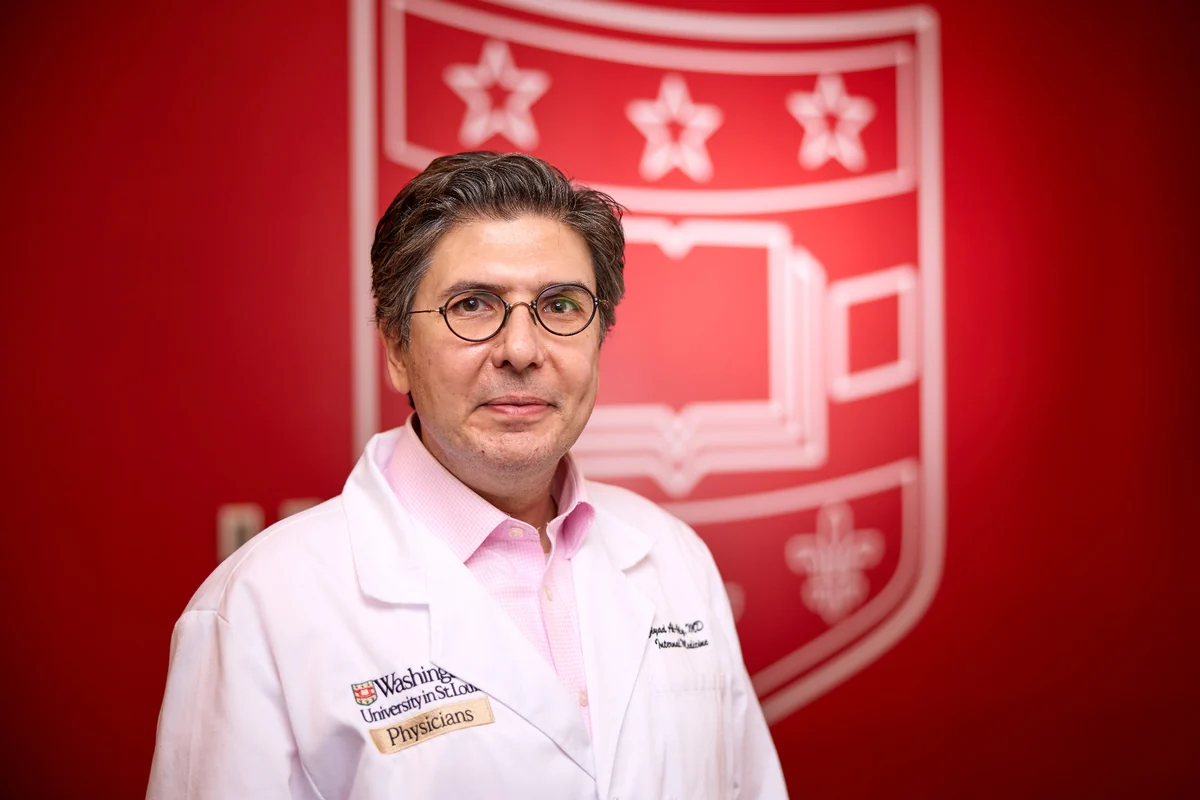
Physician-scientist and clinical epidemiologist.
Director, Clinical Epidemiology Center
Chief of Research and Development Service
VA St. Louis Health Care System
Senior Clinical Epidemiologist, Washington University in St. Louis
Today, medicine and computing meet in my work: listening to people, finding the questions that matter, and using data to help answer them.
Chapter 01
Before medicine, there was a Commodore 64
I grew up in Tripoli, Lebanon, the oldest of three children of two teachers. At 14, I taught myself to code on a Commodore 64 and thought I would become a computer scientist. One project took six months: making the computer’s internal clock appear on screen as an analog clock. It won first place in a youth coding competition.
Around that time, my father developed cancer and was hospitalized repeatedly. Visiting him, I watched his doctors and care team try to ease his pain and help him. I wanted to be one of those people—someone who could care for patients and reduce their suffering. That experience changed what I wanted to do with my life. I decided to study medicine.
I earned my medical degree at the American University of Beirut in 1999 and moved to St. Louis in 2000. I trained in internal medicine and nephrology at Saint Louis University, and completed a research fellowship at Washington University.
In 2006, I joined the VA St. Louis Health Care System as a kidney doctor and researcher. The VA’s health records connect diagnoses, lab results and prescriptions across years of care. Working with them brought medicine and coding together.
Read the story in WashU Medicine OutlookChapter 02
The decision in March 2020
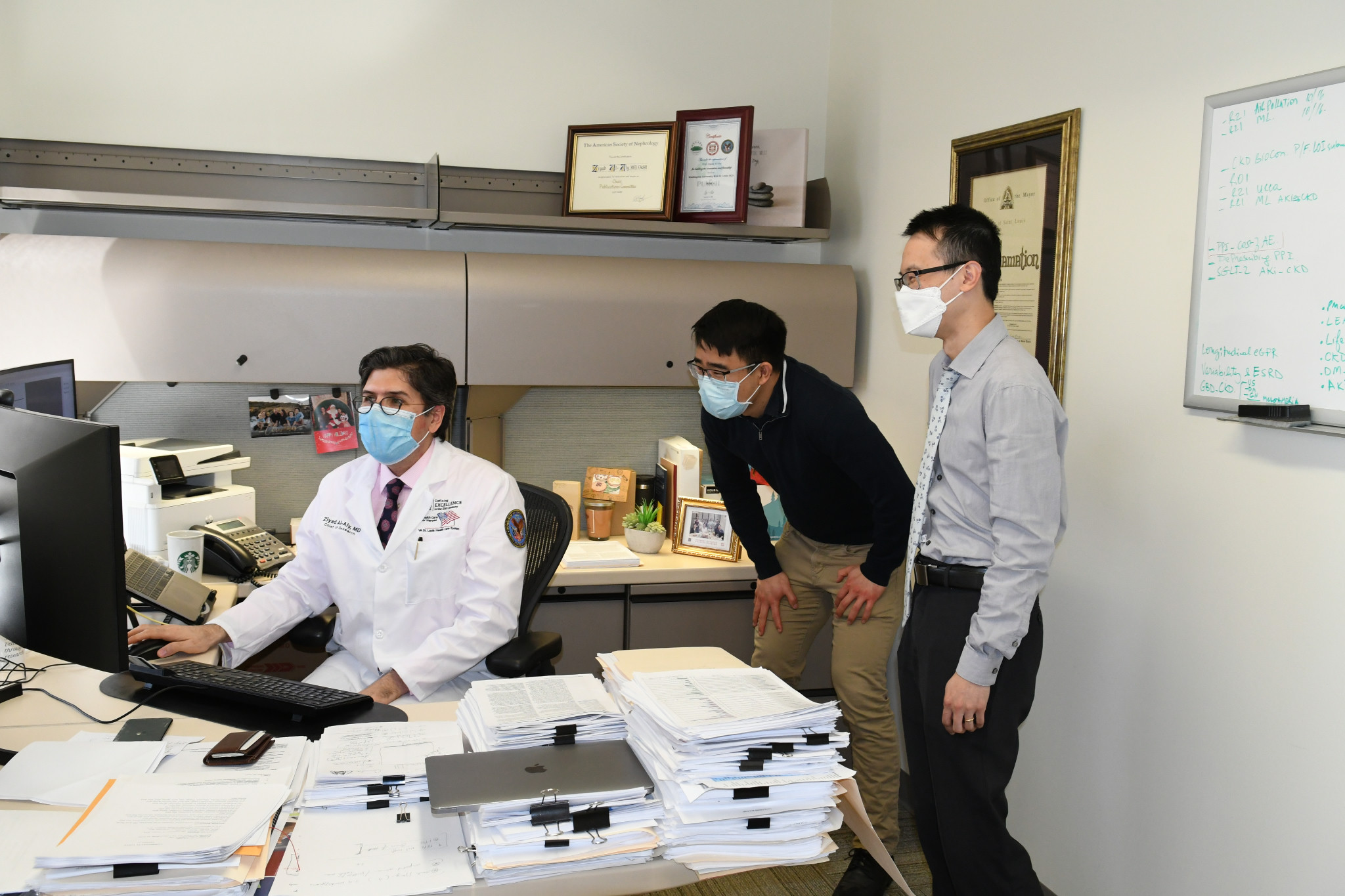
In March 2020, we had just been awarded a VA Merit Award to study medicines used to lower blood glucose. We had a funded program and a clear path ahead. It felt like a yellow brick road of certainty. Then COVID-19 arrived. We had never studied viruses or pandemics.
I was going to the hospital to treat patients with COVID-19. People were dying. Some needed intensive care, ventilation or dialysis. We needed to understand what this virus was doing to people.
We came back to who we were: clinical epidemiologists who identify consequential questions and address them rigorously with data. Staying true to that identity meant doing our part. The team supported the pivot unanimously.
Chapter 03
When patients changed the question
I remember sitting on the couch at home one night after a long day at the hospital, reading Fiona Lowenstein’s account in The New York Times. Weeks after she fell ill, she was still not well. Her account echoed what other patients were saying online: they were not getting better. These accounts raised a question we could not set aside: what happens after the acute illness?
We used health records to study the long-term effects across the body, including in people who had not been hospitalized for COVID-19. In 2021, our team published the first systematic characterization of Long COVID in Nature.
The breadth of what we found shocked me. I had been thinking of a respiratory virus, but the data showed illness across multiple organ systems.
We have since studied its cardiovascular and other long-term effects, and how risk changed with vaccination and new variants.
Listening is part of the science. People living with an illness can see problems before a study has a name for them.
Chapter 04
The answer has to hold up
When our early analyses suggested an increased risk of diabetes after COVID-19, I was skeptical. We rebuilt the cohort and repeated the analysis. The pattern persisted. The result had to survive our attempts to challenge it.
Large datasets let us ask consequential questions. Careful study design, testing other explanations and being clear about uncertainty make the findings useful.
We also study how everyday medicines, air pollution and infections shape health over time.
With GLP-1 medicines, we mapped benefits and risks across 175 health outcomes, found associations with lower risks of substance use disorders, and examined the loss of cardiovascular benefits when treatment stops.
Chapter 05
Evidence belongs in public life
I explain what our findings mean, and what they do not establish, to patients, clinicians, journalists and policymakers.
I co-chaired the committee that developed the U.S. National Research Action Plan on Long COVID. In January 2024, I testified before the U.S. Senate HELP Committee about the evidence on Long COVID and the need for research, treatment and care.
Hearing from patients who recognize their experiences in our findings keeps me going. I am grateful to work with colleagues who share that commitment.